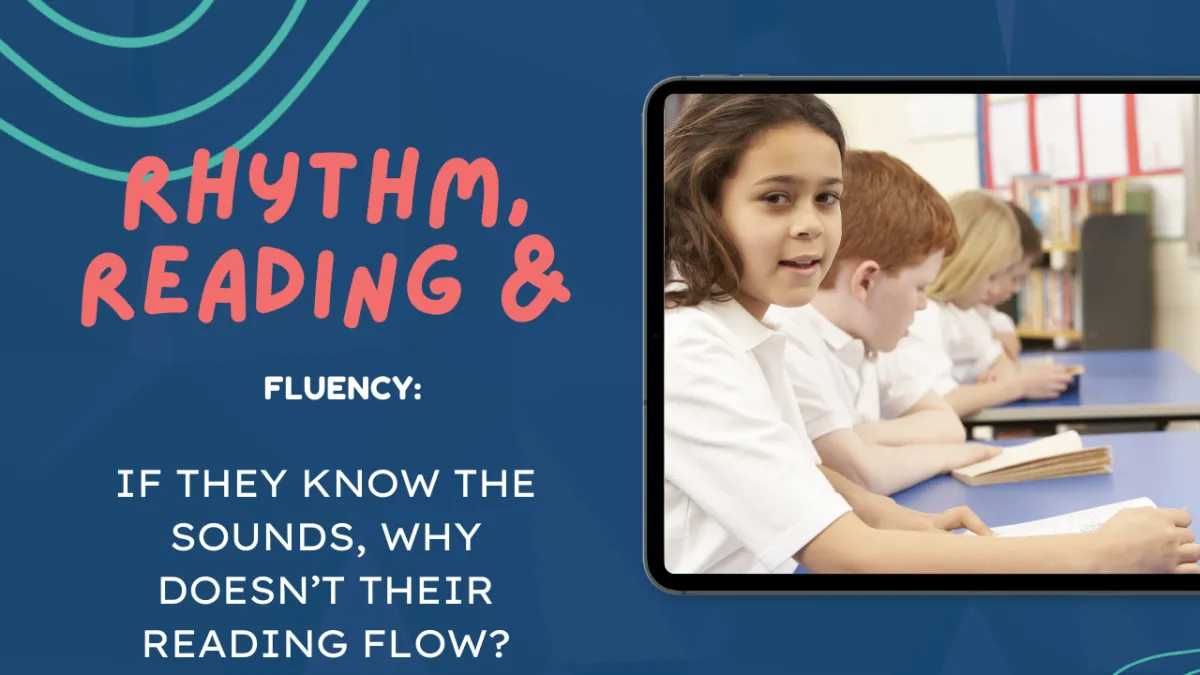
If they know the sounds, why doesn't their reading flow?
Children who know their sounds but don’t read fluently need more than phonics. Rhythm-based learning bridges the gap between decoding and fluency.

Children who know their sounds but don’t read fluently need more than phonics. Rhythm-based learning bridges the gap between decoding and fluency.

Prosody in reading signals comprehension and self-regulation. Discover how executive functions and rhythm transform reluctant readers into fluent, engaged learners.

Discover how working memory, cognitive flexibility, inhibitory control and rhythm create the 'comfort zone' of reading, where fluency and comprehension align and reading for pleasure begins.

Reading fluency is in part, about safety. How safe does this child feel in this situation? Can they let their guard down and allow the text to absorb them, or do they always need to maintain a sense of control of their learning situation?

“It’s only an hour that they have with you over the time that you come in over the six weeks and for it to be able to make, for a lot of them, up to a year’s difference in their reading ability is quite amazing really.” Year 3 teacher
© Copyright 2026 Rhythm for Reading Services Ltd All Rights Reserved. - Privacy Policy - Terms & Conditions